
One number does not describe the task
A balance enquiry often begins with the number of decimal places required. That is useful, but it does not yet explain what the laboratory will weigh or how it will accept the result. The mistake is to treat the smallest visible increment as the smallest suitable sample mass.
Before comparing models, describe the samples, vessels, usual and smallest planned quantities, and the purpose of the result. These are inputs to a discussion with the supplier and responsible laboratory specialist, not a suitability calculation.
Separate the two concepts
Sartorius defines readability as the smallest readable mass difference.[2] This describes the display, not suitability for a particular sample.
Add a question to the requested display increment: what demonstrates suitability for our smallest planned sample? Do not substitute an arbitrary multiplier or an assurance that more digits solve every task.
Ask how suitability will be established
KERN explains minimum sample weight through assessment at the place of use, considering uncertainty and process requirements.[1] A catalogue figure needs context.
Ask whether the offered figure is typical, the outcome of a specific assessment, or a condition still to be established after installation. Agree the responsible person, evidence and acceptance criterion. Replace a general “high precision” claim with an answer tied to the actual task.
Include vessels and the complete configuration
List empty-vessel mass and dimensions, placement and required accessories separately. Ask the supplier to confirm compatibility with the procedure. A photograph of the weighing pan is not enough: establish the exact version, dimensions and supplied components.
Keep unknown parameters as open questions rather than assumptions. This matters particularly for optional accessories, software connections and expected documents. A useful quotation identifies the limits of the confirmed configuration as well as its price.
Give service terms a concrete meaning
If an offer says “calibration” or “adjustment”, ask for the specific operation, provider, record and intended outcome. Do not treat any button or service entry as automatic proof of suitability for the smallest sample. The responsible specialist defines required checks under the laboratory procedure.
This article gives no legal verification requirements, minimum-weight formula or balance adjustment instructions. Do not transfer an unrelated industry example to your process. The answer must concern the actual instrument, conditions and requirements.
Record the agreed requirements
Keep five headings in the final brief: sample range, display increment, vessels and accessories, suitability assessment, and documentation. Check that the supplier answered each one and did not silently substitute a different version.
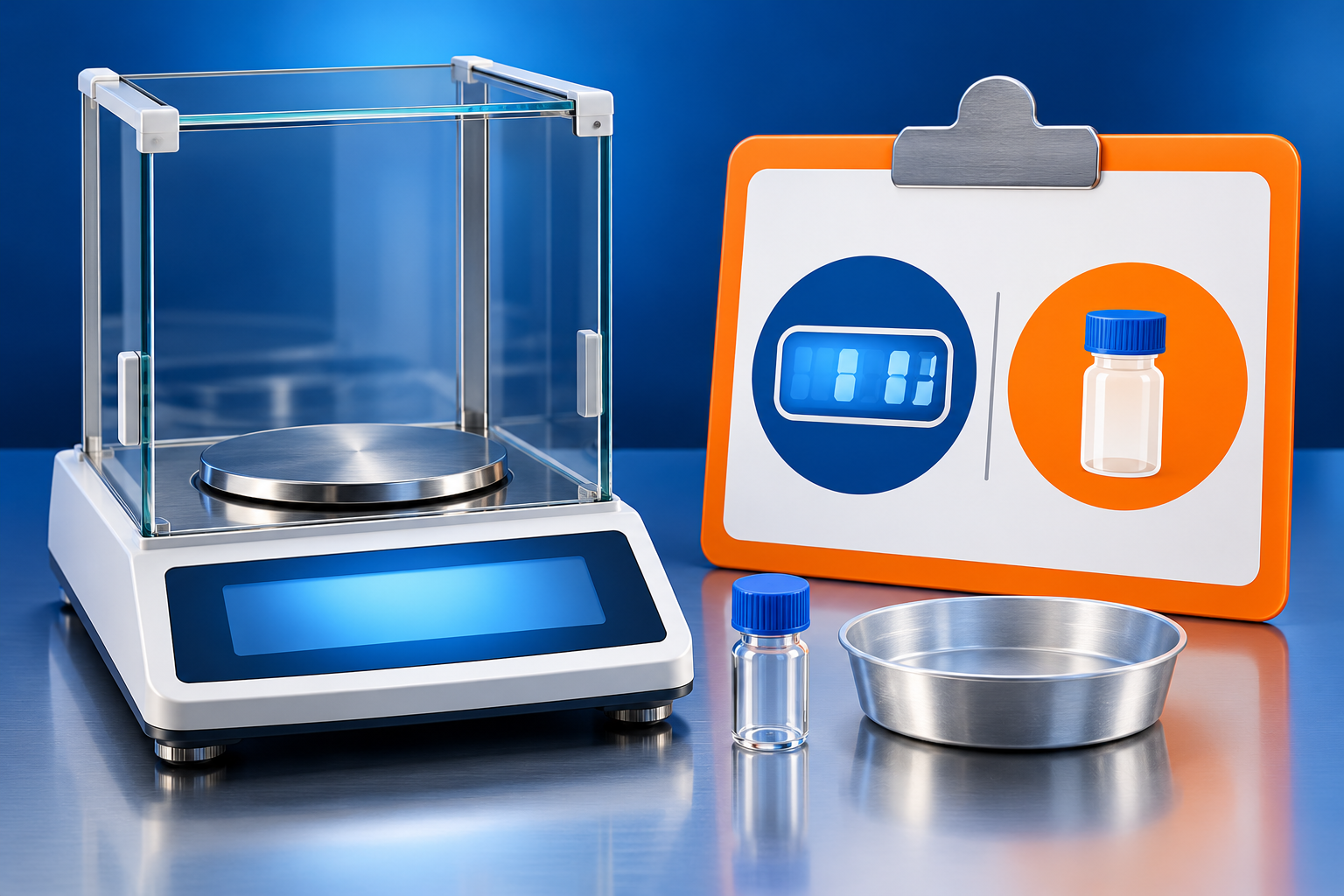
FORMED VIP uses these questions for reasoned selection, not to promise accuracy from a model name alone. Availability and supplied equipment require separate confirmation. The conceptual illustration shows neither an actual model, a measurement result nor a recommended weighing procedure.
Source and scope
Sources checked on 25 October 2026 at 21:56 UTC. Manufacturer explanations distinguish the measures; procurement questions are editorial guidance. This article specifies neither legal requirements nor a measurement procedure.