

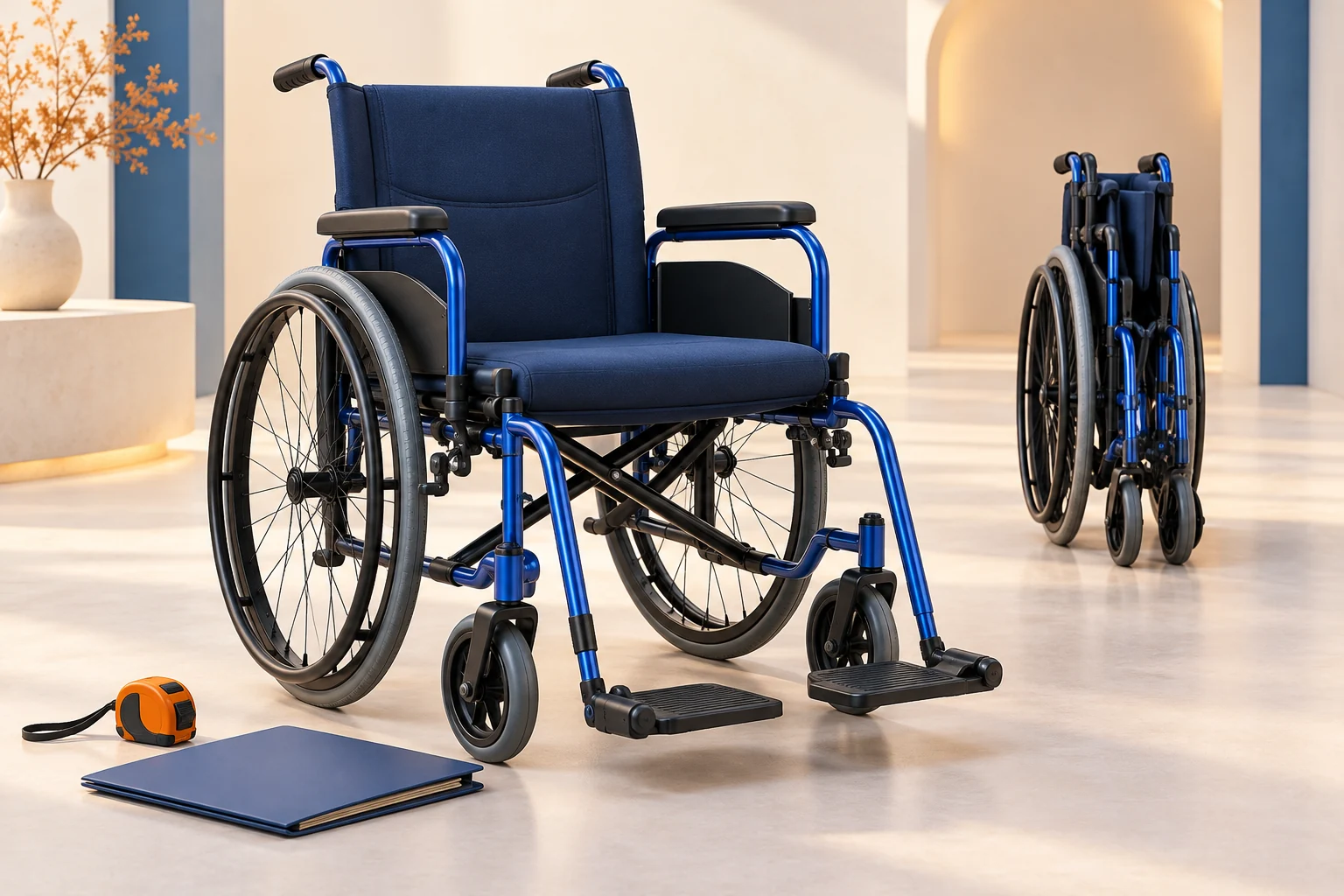
A wheelchair quotation may contain several width measurements. They answer different questions: which seat is being ordered, how much space the assembled product occupies, and what space is needed for storage after folding. Copying just one number into a purchase request without naming the parameter makes model comparisons unreliable before price is even discussed.
The measurement name matters more than a familiar number
Seat width should not be entered in the overall-dimensions field. Equally, the size of a folded product does not describe a wheelchair ready for use. Keep separate fields in the purchasing table, even when the seller presents these measurements together.
The official RubiX2 manual lists overall and folded widths separately; values depend on the specified wheel configuration. [1]
This is a documentary example of specification structure, not a model recommendation or confirmation that it is on sale. This article deliberately provides no universal “seat width plus allowance” formula: obtain dimensions for the exact configuration rather than borrowing them from a similar chair.
Compare the same product state
Ask the supplier to identify the state associated with each measurement: assembled, folded, or partly dismantled for storage. Each figure should include its unit and a list of components that remain fitted. The word “compact” is not a substitute for that record.
Where dimensions exclude certain parts, establish where those parts will be stored and whether the space plan accounts for them. This is purchasing planning, not advice to remove wheels yourself or modify the structure. Instructions for the ordered product determine the permitted actions and their procedure.
A short enquiry table
Our editorial checklist has five entries:
- exact model and selected configuration code;
- seat width as a separate parameter;
- overall width, length and height in the agreed configuration;
- folded dimensions, identifying fitted and removed components;
- supporting document, its edition, and the supplier’s written confirmation of the dimensions.
Do not fill a missing field with a value from another configuration. If the demonstration chair differs from the quotation, ask which specifications remain applicable to the actual order.
From specification to the actual space
For a space assessment, give the responsible specialist the agreed dimensions and a description of the route, not merely the model name. Comparing overall width with door width alone cannot establish that passage will be convenient and safe: the particular situation needs assessment. This article sets no regulatory passage width, manoeuvring allowance or rules for moving a wheelchair.
Do not choose a narrower seat solely to fit a passage. Individual seat selection and adjustments belong to a trained professional working with the user. The purchasing record has a more limited purpose: keep parameters distinct, document the configuration, and maintain a consistent basis for comparison and acceptance.
Source and scope
Source checked on 26 October 2026. The documentary example does not establish model availability in the catalogue.